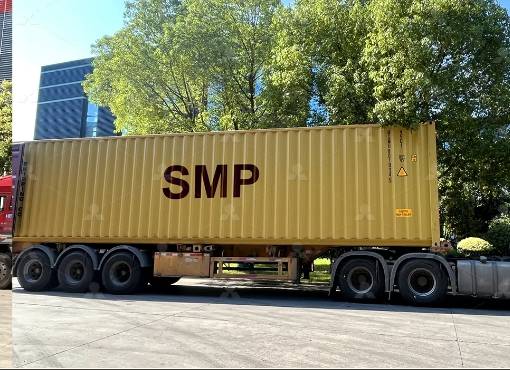
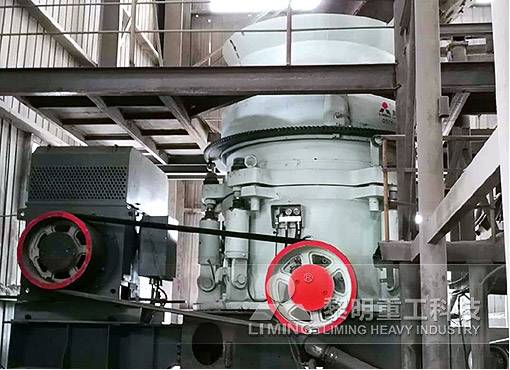
Henan LIMING Heavy Industry Science and Technology Co. LTD which mainly manufacture large and medium-sized crushing and grinding equipments was founded in 1987. It is a modern joint-stock corporation with research, manufacturing and sales together

MOBILE CRUSHERS

Stationary Crushers

Grinding Mills

Accessory Equipment
OUR
Applications
LATEST
NEWS
Limestone powder brings benefit to concrete mixing plant
How to Prevent Blockages in Crushing Plants: Common Causes and Practical Solutions 20/10/2026
Blockages are among the most frustrating problems in crushing plant operations. A crusher may be correctly sized, the motor may have sufficient power, and the production line may be designed for the required capacity. Yet a single blockage at the feed hopper, crusher inlet, discharge chute, or conveyor transfer point can interrupt the entire process.
The impact goes beyond lost production time. Repeated blockages can increase equipment wear, require additional manual intervention, disrupt downstream screening, and make it difficult to maintain a consistent production rate.
For mining operations and aggregate producers, preventing blockages starts with understanding why they occur. Material properties, equipment selection, feed control, chute design, and maintenance all play a role. This guide explains the most common causes of blockages and practical ways to reduce their frequency.
A crushing plant is a connected material-handling system. When material stops moving at one point, the effects can quickly spread to other equipment.
Blockages commonly occur in five areas:
Feed hopper: Material bridges above the outlet or sticks to the hopper walls, preventing it from reaching the feeder.
Crusher inlet: Oversized rocks, irregularly shaped material, or an uncontrolled feed rate interrupt normal feeding.
Crusher discharge: Crushed material cannot leave the chamber quickly enough, sometimes because of downstream restrictions.
Chutes and transfer points: Wet fines, clay, or poorly designed transitions cause material to accumulate.
Conveyors and screens: Excessive loading, accumulated material, or downstream equipment problems restrict material flow.
Identifying the exact location is the first step toward solving the problem. If operators respond to every blockage by changing the crusher settings, they may overlook the real cause elsewhere in the system.
A useful troubleshooting process records where the blockage occurred, the material being processed, the operating conditions, and whether the problem happens repeatedly under similar circumstances.
Oversized feed is a common source of problems in primary crushing. If a rock exceeds the crusher's allowable feed dimensions, it may become lodged at the inlet or fail to enter the crushing chamber properly.
This risk is particularly important when processing blasted rock, where individual blocks can be much larger than the average feed size.
The solution begins before the material reaches the crusher. Review blasting results, inspect the incoming feed, and use suitable rock-breaking methods when oversized blocks are present. Depending on the plant configuration, a grizzly or other suitable prescreening arrangement may also help control the material entering the primary crusher.
The crusher's maximum feed size must be checked against the actual dimensions of incoming material, not just its average size. The opening dimensions, feed arrangement, and shape of the rocks all influence whether material can enter smoothly.
Operators should also avoid attempting to force oversized rocks into the crusher by increasing the feed rate. Doing so may worsen the blockage and create additional safety risks.
A crusher cannot operate efficiently if material enters the chamber in irregular surges.
When the feeder supplies material faster than the crusher can process it, material may accumulate at the inlet or create unstable operating conditions. When the feed rate is too low, the crusher may remain underutilized, reducing the production rate of the entire line.
The correct approach is to coordinate feeder output with the crusher's actual operating capacity.
Actual capacity depends on material hardness, feed size, moisture, discharge setting, chamber design, and the required product gradation. Therefore, the feeder should not be set solely according to the crusher's maximum rated throughput.
Where appropriate, adjustable feeder speed, hopper level monitoring, and coordinated equipment controls can help maintain a more consistent feed rate. Operators should also observe whether fluctuations originate in the feed hopper, upstream loading equipment, or the crusher itself.
A stable feeding arrangement helps reduce sudden surges and makes the entire crushing circuit easier to manage.
Moisture and clay can make blockages particularly difficult to prevent. Fine particles may adhere to chute surfaces, accumulate around hopper outlets, or form compacted deposits that restrict material flow.
This is often a seasonal problem. A plant that operates reliably in dry weather may experience frequent blockages after rainfall, particularly when processing clay-rich limestone, weathered rock, or other materials with a high fines content.
Several measures can help:
Review the raw material. Determine whether the problem is caused by excessive moisture, clay contamination, or a combination of both. Material characteristics can change significantly between different working faces or stockpiles.
Evaluate hopper and chute geometry. Steepness, outlet dimensions, surface condition, and transitions affect how easily material moves. The appropriate design depends on the material's flow properties and cannot be determined by angle alone.
Consider suitable material-flow solutions. Depending on the application, options may include liners, mechanical flow aids, or other engineered measures. Their suitability should be assessed carefully because some devices can increase wear or create additional maintenance requirements.
Review the process sequence. In some operations, separating suitable fines before primary crushing can reduce the amount of sticky material entering the crusher. However, this approach must be evaluated against the actual moisture conditions and screening performance.
If wet material is a recurring problem, simply increasing the crusher's power or changing its discharge setting is unlikely to solve the underlying material-flow issue.
A crusher may be operating normally while material accumulates beneath its discharge opening. When the discharge path is restricted, the crusher can become overloaded or the entire production line may have to stop.
Chute problems can result from insufficient clearance, abrupt changes in direction, unsuitable outlet dimensions, worn liners, or material that sticks to the chute walls.
Start by checking whether the chute can handle the required throughput and the expected range of particle sizes. Pay particular attention to transitions between equipment, where material may impact surfaces or change direction.
The discharge system must also be compatible with the crusher. A high-capacity crusher cannot deliver its full output if the receiving conveyor or transfer chute becomes a bottleneck.
For existing plants, inspect areas where deposits repeatedly form. The location and shape of accumulated material may help identify whether the cause is poor flow geometry, sticky feed, excessive loading, or a mechanical fault.
Any chute modification should be evaluated for structural strength, wear resistance, maintenance access, and safe isolation procedures.
Vibrating screens can experience reduced throughput when the screen openings become blinded or pegged.
Blinding occurs when fine or sticky material covers the screen openings, while pegging happens when particles become lodged in them. Both conditions reduce the effective screening area and may cause material to accumulate on the screen deck.
The risk depends on particle shape, moisture, the proportion of near-size material, screen media, and operating conditions.
If blinding is frequent, review whether the selected screen media and opening size are suitable for the material. Depending on the application, different screen panel designs or media materials may improve performance.
Also check the feed distribution across the deck. If material is concentrated in one area, part of the screen surface may be overloaded while other sections remain underused.
Screening efficiency and capacity should be evaluated together. Changing to larger openings may reduce blockage but could compromise the required product size. Any adjustment must maintain the specifications of the final aggregate or processed ore.
Wear does not always lead directly to a blockage, but it can contribute to unstable operation.
Worn crusher liners may alter the crushing chamber's effective geometry and affect throughput or product gradation. Damaged chute liners can create uneven surfaces where material accumulates. Worn feeder components may also affect the consistency of material delivery.
For this reason, maintenance inspections should cover the complete material path rather than focusing only on the main crusher.
Useful inspection points include:
Crusher liners and the condition of the crushing chamber.
Feeder surfaces, drive components, and material discharge.
Hopper outlets and chute liners.
Conveyor loading zones and transfer points.
Screen panels, support components, and areas where material builds up.
Maintenance should be based on equipment condition, operating hours, and manufacturer recommendations. Repeatedly clearing the same blockage without inspecting the surrounding equipment can allow the underlying problem to continue.
When blockages occur frequently, operator observations should be combined with available process data.
Depending on the plant's instrumentation, useful information may include feeder speed, motor current, crusher power draw, conveyor loading, hopper level, and equipment stop records.
For example, if blockages tend to occur after sudden increases in feeder speed, feed control may need adjustment. If the problem occurs mainly after rainfall, moisture and material-flow characteristics deserve closer attention. If the crusher stops while the discharge conveyor is already heavily loaded, the downstream system may be the limiting factor.
These patterns help distinguish a mechanical problem from a process-design issue.
A simple blockage log can be valuable even in plants without advanced automation. Record the time, location, material condition, suspected cause, corrective action, and whether the same problem returns.
Over time, this information can help maintenance teams prioritize the changes most likely to improve reliability.
Preventive measures reduce the frequency of blockages, but they cannot eliminate every incident. When a blockage does occur, safety must take priority over production recovery.
Never attempt to clear a blockage by reaching into operating equipment, entering an unprotected hopper, or standing beneath unstable material. Do not rely on the machine's normal stop button alone when personnel could be exposed to moving components or stored energy.
Before clearing a blockage, follow the site's approved isolation and lockou
How to Choose the Right Feeder for a Crushing Plant: Types, Capacity, and Selection Tips 20/10/2026
In a crushing plant, the crusher often gets the most attention when production capacity becomes a concern. However, the feeding system can be just as important. If material enters the crusher too quickly, too slowly, or unevenly, the entire production line may struggle to maintain stable output.Choosing the right feeder helps regulate material flow, improve crusher utilization, reduce unnecessary wear, and keep downstream equipment operating consistently. For mining operations, quarries, and aggregate production plants, feeder selection should be based on the material, required capacity, feed size, and overall process design—not simply the rated capacity of the crusher.
This guide explains the main feeder types used in crushing plants, the factors that affect selection, and common mistakes to avoid when designing a feeding system.
The feeder connects the raw material stockpile or hopper to the primary crusher. Its job is to deliver material at a controlled rate so that the crusher can operate under suitable feeding conditions.
An undersized feeder may restrict the material flow even when the crusher has sufficient capacity. In this situation, the crusher cannot reach its potential output because it is not receiving enough material.
An oversized or poorly controlled feeding system can create the opposite problem. If too much material enters the crusher at once, the crushing chamber may become overloaded, causing unstable operation, higher power consumption, and increased mechanical stress.
Feed consistency also affects downstream processes. Uneven discharge from the primary crusher can lead to fluctuations in conveyor loading, secondary crushing performance, and screening efficiency.
For this reason, the feeder should be considered an integral part of the crushing circuit. A well-designed system balances material flow from the feed hopper through the crusher and into the next processing stage.
Different feeders serve different operating conditions. The right choice depends on the material's characteristics, required feed rate, installation arrangement, and whether the plant processes abrasive rock, sticky material, or a mixture of particle sizes.
Vibrating feeders are widely used in primary crushing plants for feeding jaw crushers and other heavy-duty crushing equipment. Vibration moves material forward at a controlled rate, allowing the operator to regulate the feed entering the crusher.
They are particularly suitable for hard rock and coarse feed material, including granite, basalt, limestone, and many types of metal ores. Depending on the design, a vibrating feeder may also include a grizzly section that separates smaller particles before they enter the primary crusher.
This arrangement can reduce unnecessary crushing of fines that are already small enough to pass through the grizzly openings. It may also help reduce the load on the primary crusher and improve the overall flow of material through the plant.
When selecting a vibrating feeder, consider the maximum feed size, required capacity, material bulk density, moisture content, and the dimensions of the feed hopper. The feeder's effective width and length must also be suitable for the incoming rock and the required feeding rate.
Apron feeders use heavy-duty plates or pans mounted on a moving chain system to transport material. They are commonly used in demanding mining applications where large, heavy, or abrasive rocks must be delivered from a hopper or stockpile to the primary crusher.
Compared with many conventional vibrating feeders, apron feeders are well suited to high-impact loading and heavy-duty operating environments. They are often considered for applications involving large run-of-mine ore, high feed loads, or installations where material handling conditions are particularly severe.
However, apron feeders generally involve a more substantial mechanical structure and maintenance requirements. Their use should be justified by the operating conditions rather than selected automatically for every crushing plant.
Belt feeders control material discharge from a hopper using a moving conveyor belt. They are useful when a relatively continuous and adjustable flow of material is required.
Belt feeders are commonly used for controlled feeding of conveyors, secondary or tertiary processing equipment, and certain fine or relatively uniform bulk materials. They can also help regulate the discharge from storage bins where consistent material flow is important.
Their suitability depends on particle size, material abrasiveness, loading impact, and the design of the hopper and belt system. For very large, sharp, heavy rocks, the impact and wear conditions must be carefully evaluated before selecting a belt feeder.
Depending on the application, a crushing plant may also use reciprocating feeders, screw feeders for suitable fine materials, or specialized feeding equipment designed for particular handling conditions.
These alternatives are not interchangeable. For example, a screw feeder may be suitable for certain fine bulk materials but is generally not the appropriate choice for feeding large blocks of hard rock into a primary crusher.
The best solution is the one that matches the actual material-handling requirements of the process.
One of the most important considerations is the relationship between feeder capacity and crusher capacity.
A feeder must deliver enough material to support the crusher's required production rate, while also allowing for variations in material flow and operating conditions. Simply choosing a feeder with a capacity equal to the crusher's advertised maximum output may not provide enough operating flexibility.
For example, consider a crushing plant designed to process 500 metric tons of raw material per hour. The feeder selection should account for the required hourly feed rate, material bulk density, particle-size distribution, hopper arrangement, and expected operating availability.
A feeder's volumetric capacity is not the same as its mass throughput. Two materials occupying the same volume can have significantly different weights because their bulk densities differ. Moisture, particle shape, and the proportion of fines can also influence actual flow behavior.
When comparing feeder specifications, confirm whether the stated capacity is expressed in cubic meters per hour or metric tons per hour. Then verify the assumptions used to calculate that capacity.
The feeding system should also work with the crusher's actual operating requirements. A crusher's production rate depends on material hardness, feed size, discharge setting, crushing chamber design, and the required product gradation. Its rated capacity should not be treated as a guaranteed production figure under every condition.
For large or variable-load installations, an adjustable feeding rate can provide useful flexibility. It allows operators to respond to changes in the incoming material and maintain a more stable production process.
Material properties have a direct influence on feeder performance.
Maximum feed size: Large rocks require sufficient feeder width, structural strength, and clearance throughout the feed path. The receiving hopper, feeder opening, and crusher inlet must all accommodate the largest expected pieces.
Hardness and abrasiveness: Granite, basalt, and many metal ores can cause significant wear on contact surfaces. Heavy-duty designs and suitable wear-resistant components may be necessary, particularly where rocks drop from a height onto the feeder.
Moisture and clay content: Wet, sticky material may adhere to surfaces or bridge inside the hopper, preventing consistent discharge. In these conditions, hopper geometry, feeder type, and any required material-flow aids deserve particular attention.
Particle-size distribution: A feed containing a broad range of particle sizes behaves differently from one containing mostly coarse rock or fine material. If the raw material contains a substantial proportion of small particles, a grizzly feeder may help remove suitable fines before primary crushing.
Bulk density: Material density affects the mass delivered at a given volumetric flow rate. It should be included when calculating the required feeder capacity and evaluating hopper loads.
A feeder that performs well in a dry limestone quarry may not be suitable for a wet iron ore operation without changes to the feeding arrangement. Selection should reflect the conditions the equipment will actually face.
The feeder and primary crusher should be designed as a coordinated system.
For a jaw crusher, the feeding arrangement should deliver material steadily and distribute it appropriately across the available feed opening. Large blocks must be compatible with the crusher's maximum feed size, while the feeder must be able to handle the incoming load without creating excessive surges.
For a cone crusher used in secondary or tertiary crushing, stable feed conditions remain important. Depending on the crusher design, maintaining a suitable feed distribution and avoiding prolonged underfeeding can help achieve more consistent crushing performance and product shape.
The same principle applies to impact crushers, although the appropriate feeding arrangement also depends on the feed size, material characteristics, and the crusher's operating limits.
In a multi-stage crushing plant, the feeder must also be compatible with upstream storage and downstream conveying capacity. A feeder that delivers material faster than the conveyor can handle will not improve overall production. Instead, it may create spillage, blockages, or unnecessary interruptions.
Before finalizing the design, check the complete material path—from the hopper and feeder to the crusher discharge and subsequent conveyor or screen.
In some primary crushing applications, a vibrating grizzly feeder can improve the efficiency of the overall process.
A grizzly feeder combines controlled feeding with a screening section. Material smaller than the selected opening can pass through the bars, while larger rocks continue toward the crusher.
This can be beneficial when the raw material contains a meaningful quantity of naturally occurring fines. By bypassing material that does not require primary crushing, the plant may reduce unnecessary crushing work and improve the use of the crusher's available capacity.
However, a grizzly feeder is not automatically the best choice for every project. Its effectiveness depends on the amount and size of the fines, the moisture and clay content, and the required product specifications.
If the material is sticky or contains substantial clay, the openings may become blocked. The design must therefore account for actual feed conditions and maintenance requirements.
The decision should be based on the expected material balance and process performance, rather than assuming that removing fines will always increase production.
Several design mistakes can create operating problems even when the crusher itself is correctly selected.
Selecting equipment based only on nominal capacity. Capacity figures must be evaluated alongside material density, feed size, moisture, and the intended operating rate.
Ignoring hopper design. A suitable feeder cannot compensate for a hopper that allows material to bridge, discharge unevenly, or place excessive loads on the feeding mechanism.
Underestimating the maximum rock size. The entire feed path must accommodate the largest expected pieces, not just the average particle size.
Overlooking wear and maintenance. Abrasive materials and heavy impact loading can increase maintenance frequency if the feeder is not designed for the application.
Failing to coordinate the downstream equipment. Feeder output must be compatible with crusher capacity, conveyor loading, and screening requirements.
Operating without adequate feed control. Depending on the plant design, variable-speed drives, level sensors, or other control arrangements can help regulate material flow and reduce interruptions. These systems should be selected according to actual process needs.
Correcting these issues during the design stage is generally easier than modifying the feeding system after the plant has been installed.
Before requesting a feeder configuration or quotation, prepare the following information:
Material: Granite, basalt, limestone, iron ore, gold ore, or another material.
Required capacity: Target throughput in metric tons per hour.
Maximum feed size: The largest expected rock entering the feeding system.
Feed characteristics: Bulk density, particle-size distribution, moisture, and clay content.
Crusher type: Jaw crusher, cone crusher, impact crusher, or another machine.
Installation conditions: Hopper dimensions, available space, loading method, and foundation requirements.
Operating requirements: Expected working hours, maintenance access, and the requir
Liming Heavy Industry to Exhibit at bauma CHINA 2026 16/10/2026
Liming Heavy Industry is pleased to announce its participation in bauma CHINA 2026, one of Asia's leading trade fairs for construction machinery, building material machines, mining machines, and construction vehicles. The exhibition will bring together equipment manufacturers, industry professionals, and customers from around the world to explore the latest technologies and business opportunities.
Visitors are welcome to meet the Liming Heavy Industry team at Booth E6.510 at the Shanghai New International Expo Centre (SNIEC), Shanghai, China.

Exhibition: bauma CHINA 2026
Booth: E6.510
Venue: Shanghai New International Expo Centre (SNIEC)
City: Shanghai, China
With extensive experience in crushing, screening, and manufactured sand production equipment, Liming Heavy Industry provides equipment and complete production solutions for mining, quarrying, construction aggregates, and other material-processing applications.
At bauma CHINA 2026, visitors will have the opportunity to learn more about our equipment portfolio and discuss practical solutions for different project requirements.
Our solutions cover a range of applications, including:
Mining and Ore Processing
Reliable crushing solutions for hard rock and metallic ores, designed around feed characteristics, production targets, and downstream processing requirements.
Aggregate Crushing and Screening
Integrated crushing and screening systems for producing multiple aggregate sizes with stable output and consistent product quality.
Manufactured Sand Production
Crushing and shaping solutions for manufactured sand applications, helping producers meet particle-size and gradation requirements.
Mobile Crushing Solutions
Flexible crushing and screening equipment for projects that require convenient deployment, adaptable production arrangements, or changing working locations.
Selecting the right equipment involves more than choosing an individual crusher. Material hardness, maximum feed size, required capacity, finished-product specifications, site conditions, and operating costs all influence the final plant configuration.
During the exhibition, visitors can discuss their specific project needs with our team, including:
Equipment selection for different raw materials
Crushing and screening plant configuration
Production capacity and final product sizes
Mobile and stationary crushing solutions
Wear-part management and operating cost optimization
Customized equipment solutions for mining and aggregate projects
Whether you are planning a new quarry, upgrading an existing crushing line, or looking for equipment for a mining project, our team looks forward to exchanging ideas and exploring potential cooperation.
Why
Choose Us
Passionate
Professional
Support